1800 121 5955
WCAG compliance is not merely a legal checkbox; it’s a strategic foundation for inclusive, resilient digital transformation. For BFSI, healthcare, and other regulated enterprises, embedding accessibility early through research-led design, continuous automated and manual testing, and accessibility SME guidance reduces legal risk, avoids costly rework, expands market reach, and creates clearer digital experiences for every user.
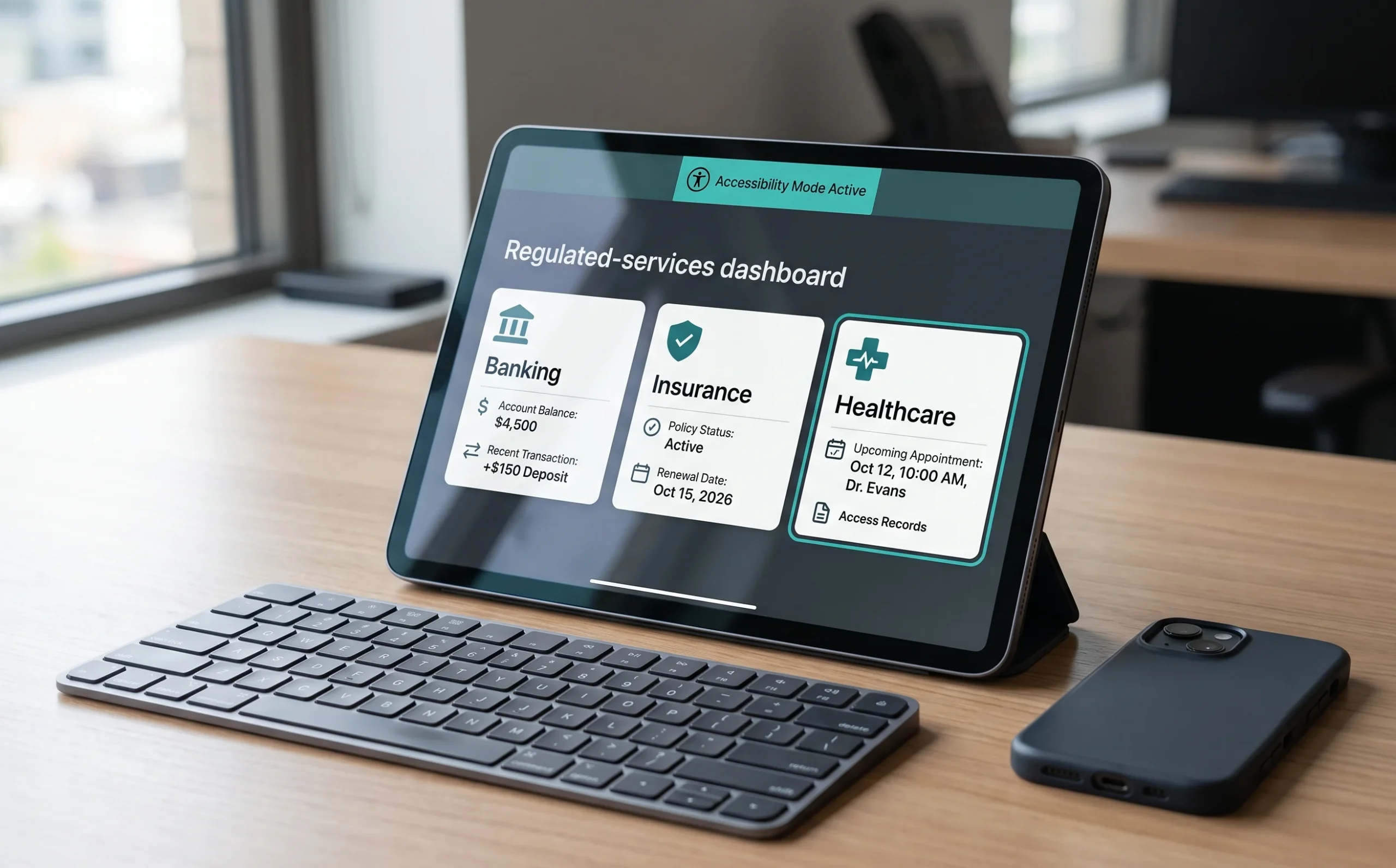
Accessibility in Regulated Industries: Why WCAG Matters
Digital accessibility is no longer a checkbox exercise; it’s a core pillar of competitive advantage for enterprises operating in regulated industries.
The numbers make the business case impossible to ignore. The global market of people with disabilities exceeds 1 billion people, representing $6 trillion in spending power, and that’s before you factor in the aging population, situational impairments, or users who simply benefit from cleaner, more intuitive digital experiences. For C-suite leaders mapping out digital transformation strategies, overlooking accessibility means leaving a significant market segment underserved and, increasingly, inviting regulatory scrutiny.
Reactive compliance has long been the default posture: build the product, face a complaint, retrofit a fix. That cycle is expensive, disruptive, and frankly avoidable. Forward-thinking organizations are shifting toward proactive inclusive design, embedding accessibility requirements from the earliest stages of product development rather than treating them as a remediation task. This is where structured accessibility testing becomes essential. Integrating it into the development pipeline, not bolted on at the end, is what separates mature digital programs from those perpetually playing catch-up.
ESG alignment is accelerating this shift further. Social governance frameworks now expect enterprises to demonstrate measurable commitments to digital inclusion, and accessibility is one of the most concrete, auditable expressions of that commitment. Board-level conversations about ESG impact are increasingly landing on accessibility metrics as a tangible deliverable, not an aspirational footnote.
What this all points to is a standards question. And in regulated sectors like BFSI and Healthcare, that question has a clear answer: WCAG. Understanding exactly what those guidelines require, and what they don’t, is where the real strategic work begins.
Decoding WCAG: What These Standards Mean for Regulated Sectors
WCAG compliance is the shared language of digital accessibility, a framework that translates legal mandates, user needs, and technical requirements into actionable guidance for product teams.
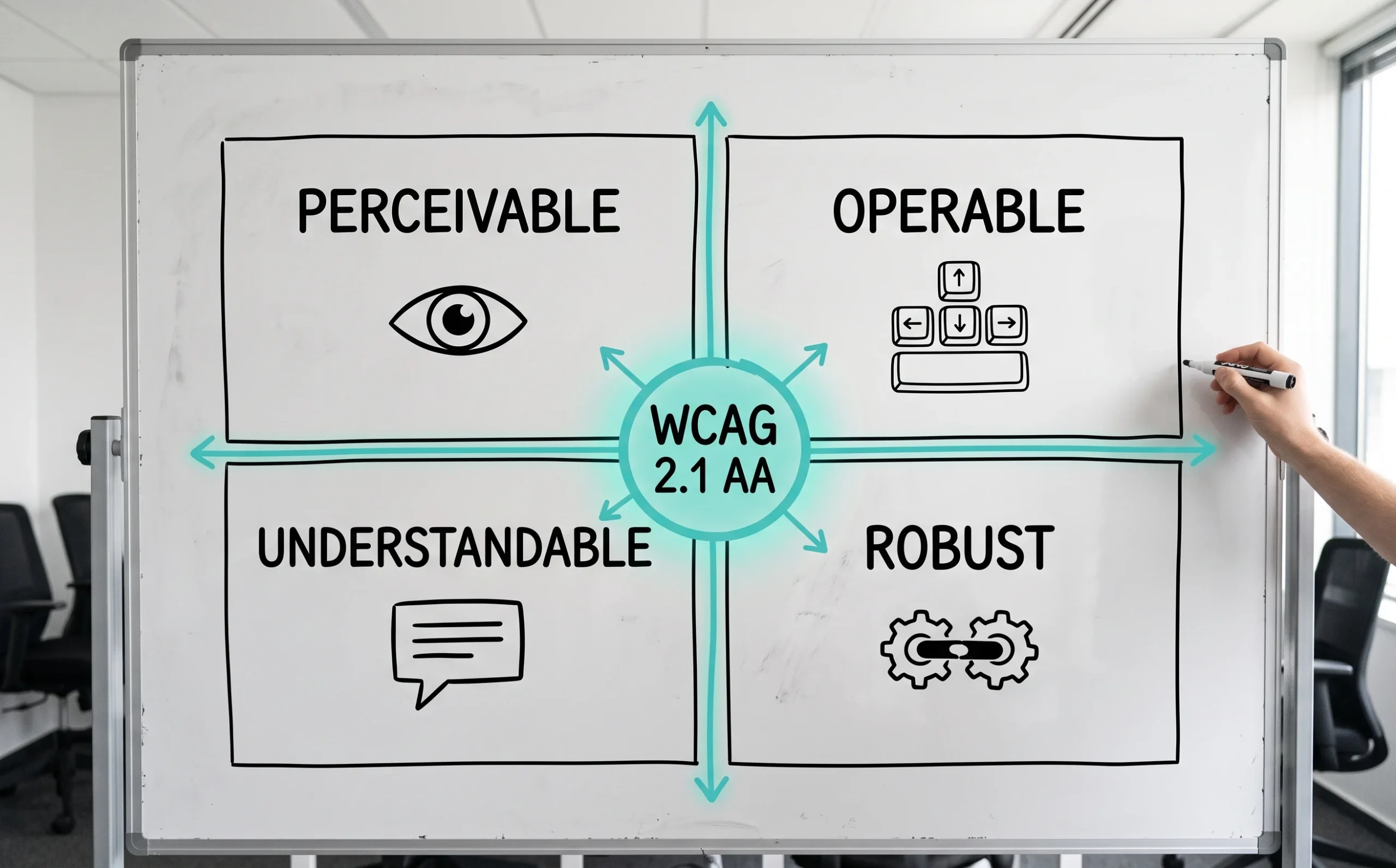
Understanding what WCAG actually requires starts with its four core principles, collectively known as POUR:
- Perceivable – Content must be presented in ways users can detect, regardless of their sensory abilities. Think alt text for images, captions for video, and sufficient color contrast for text.
- Operable – Interfaces must be navigable by keyboard, voice, and assistive technologies, not just a mouse. This matters especially in complex financial dashboards or patient portals where multi-step navigation is common.
- Understandable – Language, error messages, and workflows must be clear and predictable. In regulated sectors, ambiguous instructions aren’t just frustrating, they can have real consequences for end users.
- Robust – Content must be built to work reliably across a wide range of assistive technologies and browsers, both now and as those tools evolve.
The WCAG 2.1 AA benchmark carries particular weight in BFSI and healthcare. It’s the widely accepted standard across global regulatory bodies, forming the technical backbone of requirements like the European Accessibility Act, the Americans with Disabilities Act (ADA), and Canada’s AODA. For U.S.-based enterprises, Section 508 compliance maps closely to WCAG 2.1 AA, meaning organizations that meet one are well-positioned to satisfy the other. But the overlap isn’t perfect — Section 508 applies specifically to federal agencies and contractors, while WCAG’s scope is broader.
And here’s where many organizations get caught off guard. Technical compliance and genuine usability aren’t the same thing. A product can pass automated accessibility audits and still present a frustrating experience for users relying on screen readers or alternative input devices. In practice, checklists catch structural issues — they don’t test cognitive load, workflow logic, or real-world assistive technology behavior. That gap matters in high-stakes environments where a confusing insurance claim form or an inaccessible medication portal can directly affect outcomes.
That distinction — between passing a standard and truly serving users — is exactly what makes the cost of getting it wrong so significant, and it’s something the next section examines in depth.
The Cost of Inaction: Legal and Financial Risks in BFSI and Healthcare
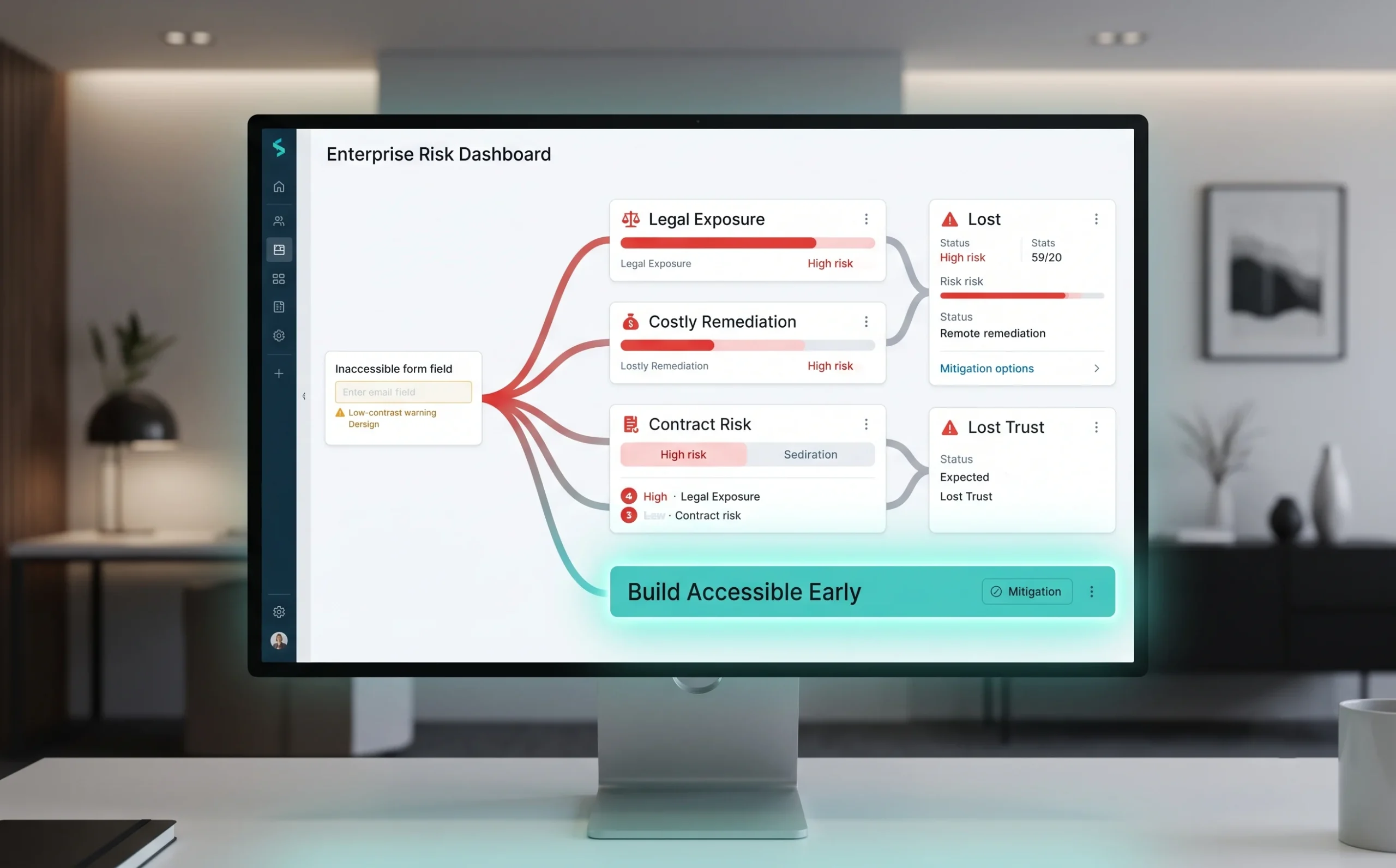
Failing to prioritize digital accessibility isn’t just an ethical oversight — it’s a measurable financial and legal liability that regulated industries can no longer afford to ignore.
Litigation is accelerating. Federal website accessibility lawsuits in the U.S. rose to 3,117 in 2024, signaling a clear enforcement shift across industries. And the numbers in Europe are equally stark: a significant number of European websites fail to meet accessibility requirements. For BFSI and healthcare organizations, where products handle sensitive information and critical decisions, these aren’t abstract statistics — they translate directly to regulatory exposure and reputational damage.
BFSI and healthcare apps carry significant risk. Banking platforms, patient portals, and insurance dashboards are information-dense by nature. Complex data tables, multi-step authentication flows, and time-sensitive alerts all create friction points for users with disabilities. When those experiences aren’t accessible, organizations face simultaneous exposure across multiple fronts:
- Regulatory penalties from bodies like the CFPB, HHS, or EAA enforcement authorities
- Civil litigation from users who couldn’t access essential services
- Audit findings during due diligence reviews or third-party security assessments
- Contract losses with public-sector clients that mandate WCAG conformance
The cost of remediation is significant. Retrofitting accessibility into a shipped product typically costs three to five times more than building it in from the start. What begins as a scoped fix often exposes cascading issues across component libraries, content management workflows, and third-party integrations. The math consistently favors proactive design — not reactive patching.
Brand trust compounds every risk factor. In high-stakes industries, customers make decisions based on confidence. A bank or healthcare provider that’s publicly named in an accessibility lawsuit sends a clear signal: not everyone is welcome here. That perception erodes loyalty, invites regulatory scrutiny, and can suppress adoption among the very demographics — aging populations, users with chronic conditions — that these sectors serve most heavily.
Understanding where these risks concentrate in the product lifecycle points directly to the design and development decisions that either create them or prevent them entirely.

Accessibility Pillars in Modern Web and Product Design
Accessibility built into the foundation of a product delivers better outcomes than accessibility bolted on after launch — and in regulated industries, that distinction carries real consequences.
The concept of shifting accessibility “left” means addressing it earlier in the design and development lifecycle, before patterns are set and technical debt accumulates. When accessibility requirements enter the conversation at the wireframe stage rather than the QA stage, teams avoid costly redesigns and reduce the risk of shipping experiences that exclude users from the start. This is especially critical in sectors where Section 508 compliance is a legal baseline, not a nice-to-have.
Research-driven design plays a central role here. Identifying accessibility gaps through early user research — rather than inferring them from checklists alone — surfaces issues that automated audits often miss entirely. Cognitive load, navigation complexity, and terminology clarity are the kinds of friction points that only become visible when you study how real users interact with a product. In practice, teams that embed accessibility research into discovery phases catch far more meaningful barriers than those who treat it as a final-stage audit.
Accessibility done right starts with understanding people — their contexts, their constraints, and their expectations. That’s the foundation of a research-first methodology that makes digital products genuinely inclusive, not just technically compliant.
Cognitive accessibility deserves particular attention in high-stakes environments like banking and healthcare portals. Complex interfaces with dense information hierarchies, multi-step workflows, and jargon-heavy language create real barriers for users with cognitive disabilities, low digital literacy, or situational impairments. Simplifying task flows and using plain language aren’t trade-offs against functionality — they’re design decisions that improve outcomes for everyone.
ScreenRoot’s work in regulated industries reflects exactly this philosophy: a research-driven approach to digital product strategy that treats inclusive design as foundational rather than supplemental. That kind of structural thinking sets the stage for something equally important — how you test and verify accessibility at every stage of development.
Implementing a Robust Accessibility Testing Framework
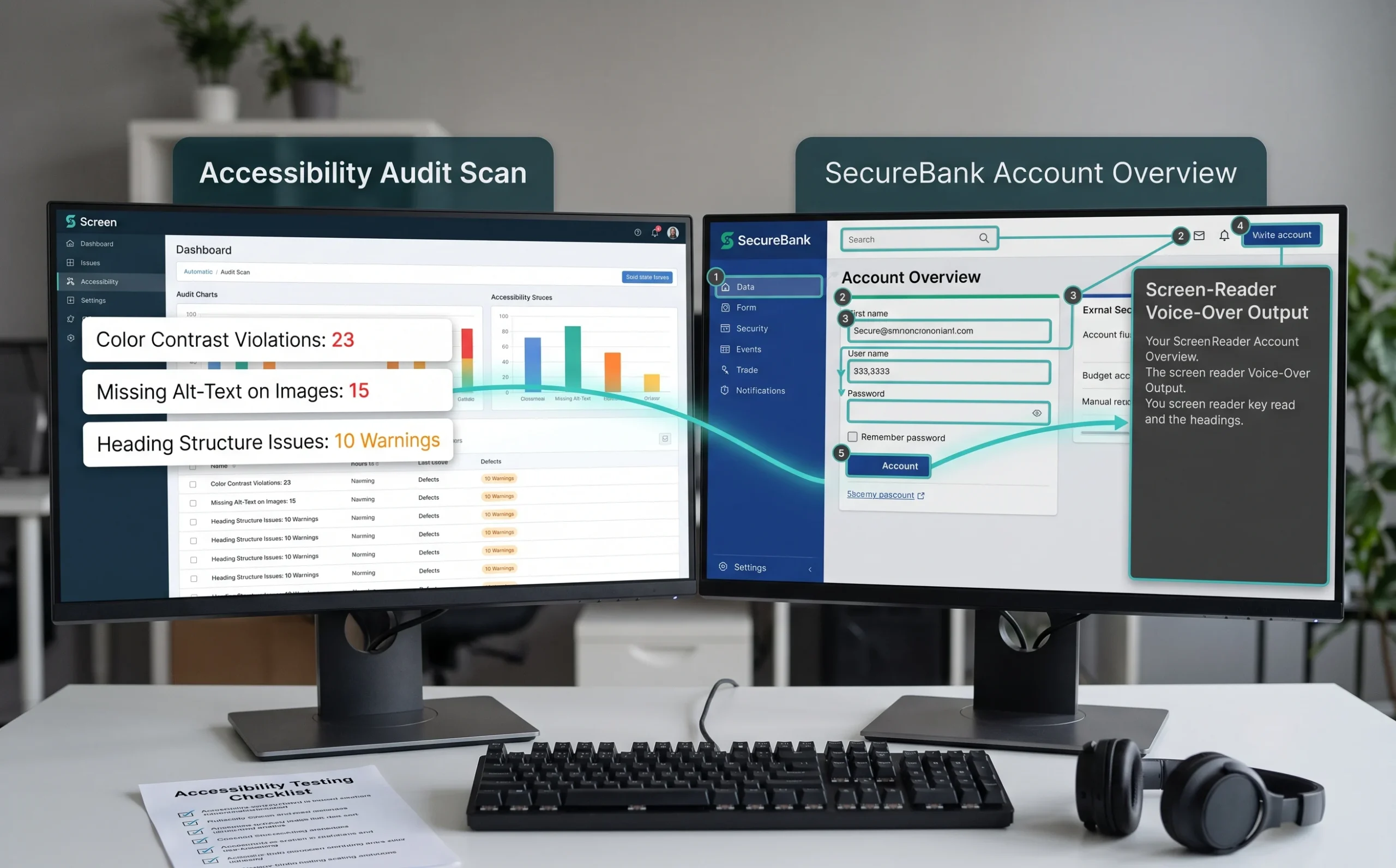
Meeting WCAG 2.1 AA isn’t a one-time audit — it’s an ongoing discipline that demands both automated efficiency and human judgment working in tandem.
Automated vs. Manual Testing serve fundamentally different purposes in an accessibility program. Automated tools scan code quickly, flagging issues like missing alt text, low color contrast ratios, and improper heading structure. But they have a hard ceiling: automated tools typically catch only 30% to 40% of accessibility issues, meaning the majority of real-world barriers go undetected without human review. Manual testing fills that gap — evaluating interaction flows, focus management, screen reader behavior, and cognitive load in ways no tool can replicate.
| Dimension | Automated Testing | Manual Testing |
| Speed | Fast, runs at scale | Slower, requires trained testers |
| Coverage | ~30–40% of issues | Addresses the remaining 60–70% |
| Best for | Syntax errors, contrast, structure | Interaction flows, screen reader UX |
| Integration point | CI/CD pipeline | Sprint review, QA cycles |
| Focus | Code-level validation | Human experience & cognitive load |
User involvement is where many organizations cut corners — and it shows. Bringing people with disabilities into usability testing isn’t optional; it surfaces friction points that even experienced accessibility auditors miss. In practice, a screen reader user navigating a loan application form will expose workflow gaps that no checklist anticipates. Schedule structured sessions with participants across a range of assistive technologies and disability types.
Continuous monitoring reflects the reality that accessibility degrades over time. New features ship, content gets updated, third-party components change — and each touchpoint introduces regression risk. Integrating accessibility checks directly into the CI/CD pipeline means issues get caught before they reach production, not after a complaint or audit triggers a costly remediation cycle.
The goal isn’t just passing a checklist. It’s building systems resilient enough to stay accessible as your product evolves — which is exactly the foundation for unlocking broader business value, as the next section explores.
Beyond Compliance: Unlocking Market Value Through Inclusive UX
Accessibility done right doesn’t just satisfy regulators — it actively expands your market reach, strengthens your brand, and improves the digital experience for every user who visits your platform.
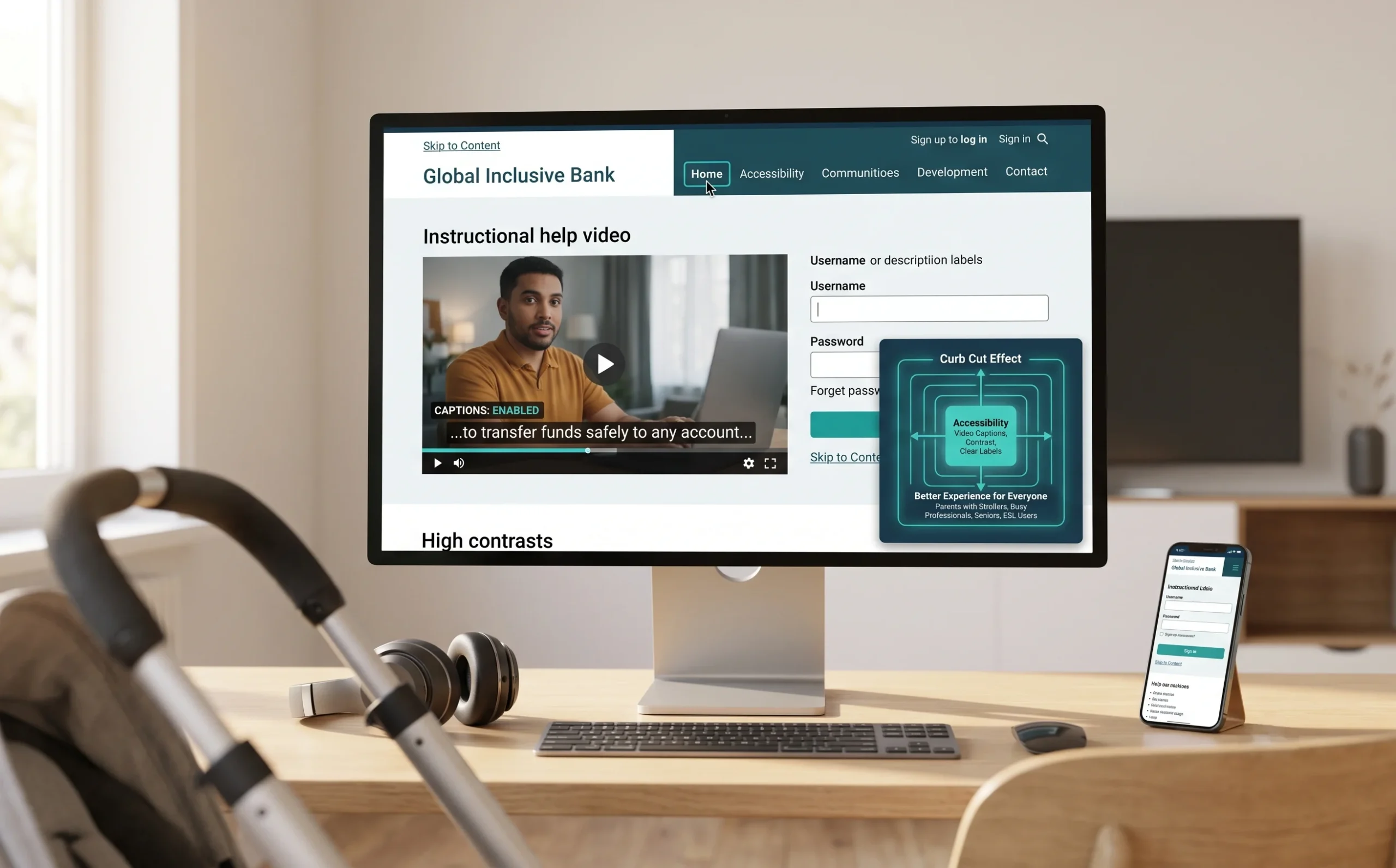
The Curb Cut Effect is one of the most compelling arguments for inclusive design. Originally coined from the physical world — where sidewalk curb cuts built for wheelchair users also helped cyclists, parents with strollers, and delivery workers — the principle translates directly to digital products. Captions benefit users watching video in noisy environments. Keyboard navigation helps power users move faster. Clear, high-contrast text reduces eye strain for everyone. When you design for the edges of the user spectrum, the center benefits too.
SEO and site performance represent a meaningful secondary gain that’s easy to overlook. Accessible design often leads to cleaner code and better performance, which directly impacts search engine visibility. Semantic HTML — proper heading hierarchies, descriptive alt text, meaningful link labels — is exactly what both assistive technologies and search engine crawlers rely on to understand page structure. In practice, organizations that prioritize accessibility often see measurable improvements in organic rankings and Core Web Vitals scores without treating SEO as a separate workstream.
BFSI sector insights reinforce the conversion case. Inclusive design in banking and financial services has consistently shown that simplified navigation, plain-language disclosures, and accessible form structures reduce drop-off during account opening and loan application flows — processes where friction is expensive. And it’s not just about removing barriers; it’s about building confidence at critical decision points.
Secondary business benefits compound over time:
- Wider addressable market — roughly 1 in 4 U.S. adults lives with a disability, representing significant untapped purchasing power
- Reduced legal exposure — proactive compliance lowers the risk of costly remediation and litigation
- Stronger brand equity — demonstrating inclusive values resonates with younger, socially conscious consumers
- Lower long-term maintenance costs — accessible codebases are typically more modular, documented, and easier to update
Future-proofing is arguably the strongest strategic argument. Regulatory standards like WCAG continue to evolve, and organizations that build accessibility into their development culture adapt far more quickly than those reacting to each new mandate. But knowing what to build toward is only part of the equation — you also need the right internal expertise to drive that cultural shift, which is exactly where the accessibility SME role becomes essential.

The Role of the Accessibility SME in Enterprise Transformation
In regulated industries, an accessibility Subject Matter Expert isn’t a luxury — they’re the connective tissue between legal mandates, design decisions, and the technical realities of your digital ecosystem.
What makes a strong SME goes well beyond knowing WCAG criteria by chapter and verse. As TetraLogical notes, effective accessibility SMEs must understand both the technical WCAG specifications and the business context of the industry they serve. That dual fluency is rare, and it’s exactly what enterprise transformation demands. A strong SME brings:
- Deep familiarity with WCAG 2.1 AA success criteria and how they apply across platforms
- Working knowledge of relevant regulatory frameworks — ADA, Section 508, EN 301 549
- Ability to translate compliance requirements into actionable design and development briefs
- Experience facilitating cross-functional conversations between legal, UX, and engineering teams
Bridging the gap between legal requirements and design execution is where most organizations stumble. Legal teams speak in risk and liability; designers think in user flows and components. An SME translates fluently between both, ensuring that compliance decisions don’t produce clunky, inaccessible workarounds — but instead inform thoughtful, inclusive UX from the ground up.
Building internal culture is the longer game. An SME who embeds accessibility thinking into onboarding, design critiques, and sprint reviews creates a multiplier effect across the entire organization. Compliance stops being a checklist and starts becoming a shared standard.
And for teams that don’t yet have that internal expertise, partnering with a specialized agency can dramatically compress timelines — giving your teams a proven framework while building the internal knowledge they’ll need for long-term ownership. That combination of external expertise and internal capability is what separates organizations that sustain accessibility maturity from those that treat it as a project. The decisions you make around expertise and culture ultimately shape every outcome — which is worth keeping in mind as we draw together the key lessons for digital leaders.
Key Takeaways for Digital Leaders
WCAG 2.1 AA compliance isn’t optional for regulated industries — it’s the baseline standard that determines whether your digital products stay in the market or get pulled out of it.
As covered throughout this article, the stakes extend well beyond checking a legal box. Here’s what every digital transformation lead should carry forward:
- WCAG 2.1 AA is the floor, not the ceiling. In regulated industries — finance, healthcare, government — WCAG compliance directly maps to enforceable legal requirements across multiple jurisdictions. Treating it as a minimum standard, not a finish line, keeps you ahead of tightening mandates.
- Accessibility expands your addressable market. The disability community represents over one billion people globally. And beyond that group, accessible design consistently improves usability for all users — including aging populations, situational impairments, and mobile-first audiences. It’s a growth lever, not just a legal shield.
- Research-driven design is the most efficient long-term investment. Building accessibility into discovery and design phases costs significantly less than retrofitting it after launch. One practical approach is embedding WCAG’s core principles — Perceivable, Operable, Understandable, Robust — into your design system from day one.
- Compliance isn’t a one-time audit. Continuous testing and dedicated accessibility SME involvement are what separate organizations that maintain standards from those that quietly fall out of them. What typically happens is that digital products drift out of conformance during routine feature releases — without a governance structure to catch it.
The common thread connecting all four of these points is intentionality. Accessibility doesn’t happen by accident in complex digital environments. It requires methodology, expertise, and a long-term commitment baked into how your organization builds and maintains its products. The good news is that the right partner — one with deep experience in regulated sectors and a research-first approach — can make that commitment far more achievable than it looks from the outside.
Future-Proofing Your Digital Strategy with ScreenRoot
WCAG compliance isn’t a finish line — it’s the foundation of a digital strategy that stays competitive, legally defensible, and genuinely usable as standards evolve.
Regulated industries can’t treat accessibility as a later-phase concern. Banking platforms, healthcare portals, and insurance products face simultaneous pressure from regulators, litigators, and users who expect seamless experiences regardless of ability. Getting ahead of that pressure requires a methodology built around research, not just a checklist audit.
ScreenRoot’s work across complex enterprise sectors reflects 16 years of navigating exactly that terrain. A research-first approach means accessibility decisions are grounded in real user behavior data, not retrofitted to meet a compliance threshold after design is locked. That distinction matters — because what passes a technical audit doesn’t always work for the people relying on assistive technology in real-world conditions. And what works for users tends to hold up far better under regulatory scrutiny, too.
The practical next step for digital transformation leads is an honest assessment of where current digital assets stand against WCAG 2.1 AA criteria, rather than a full platform overhaul. Gaps in keyboard navigation, color contrast, or screen reader compatibility surface quickly when you know where to look. Addressing them early is considerably less expensive than addressing them post-litigation.
If you’re leading digital transformation in a regulated industry, don’t wait for a compliance incident to drive the conversation. Connect with ScreenRoot to audit your current digital assets for WCAG alignment — and build a strategy where accessibility and exceptional user experience advance together, not in opposition.
Written by Team ScreenRoot. 16+ years leading enterprise UI/UX research for BFSI, SaaS, and Healthcare clients.
When you’re ready, let’s talk.
📞 Call us (Toll-Free): 1800 121 5955 (India)
✉️ Email us: [email protected]