1800 121 5955
Your website is often the first place people meet your brand. And just like in real life, first impressions matter. That is where website UI design comes in. It shapes how users see, feel, and interact with your digital presence from the very first click.
At its core, UI design focuses on the user interface. This includes layout, typography, color, white space, and interactive elements. Together, these visual elements help users move through a website with ease. When done well, web UI design feels natural. Navigation becomes easy to follow. Buttons feel clear. Content feels readable. As a result, users stay longer and engage more.
Good UI and UX design work together. UI handles how things look and behave. UX design focuses on how things feel and flow. Both aim to improve usability and the overall user experience. A clean interface design reduces friction. It also helps users interact with digital products without thinking too hard. This is where design principles, accessibility, and user-centered design play a big role.
Today, users expect websites to be visually appealing and easy to use. They want clean UI, clear navigation, and seamless interaction design across devices. Designers use tools like Figma, wireframes, and prototypes to test ideas early. This helps design teams align with users’ needs and business goals.
Simply put, website UI design is not just about looks. It is about clarity, usability, and trust. And when done right, it turns casual visitors into confident customers.
What Is Website UI Design and Why It Matters
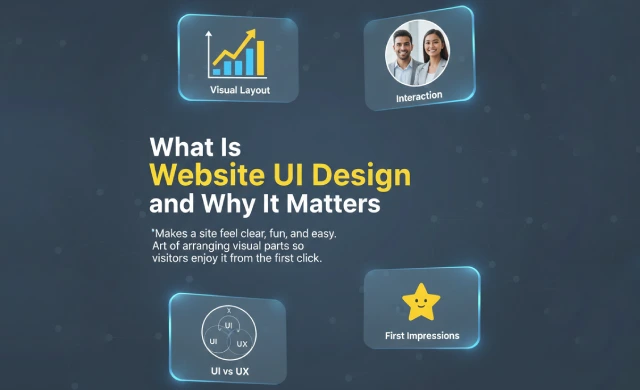
Website user interface (UI) design makes the part of a site that users see and click feel clear, fun, and easy. It is the art of arranging visual parts so visitors enjoy using your site from the very first moment. Good UI makes websites feel friendly and usable from the start.
What Website UI Design Really Means?
Website UI design is how a site looks and works for the people who use it. It covers the layout, colors, buttons, icons, typography, spacing, and menus that users see. These elements guide users to interact with the site in a way that feels natural. Think of it as the face and hands of your digital product that help people navigate and act without confusion.
Visual Layout, Structure, and Interaction
UI design focuses on how things appear on the screen and how they behave when a user taps or clicks. A layout sets where things sit. Colors and typography make it easy to read and feel right. Buttons and interactive design elements help users know what to do next. When these parts work together, users don’t need a guide to find what they want.
UI vs UX – What’s the Difference?
UI design is about how the site looks and responds. UX design is about how a visit feels overall. In simple terms, UI is the interface’s visual and interactive layer. UX is the entire journey, from landing on a page, to reading content, to finishing a task. Good UI supports good UX, but they are not the same thing.
Why First Impressions Matter?
When users arrive, they decide fast if a site feels helpful. A great website UI makes that first look feel clean and simple. Users notice good layout, easy navigation, and a comforting flow. This makes them want to stay longer and explore more. Usability and a seamless interface help users feel confident and satisfied right away.
How Website UI Design Shapes User Experience
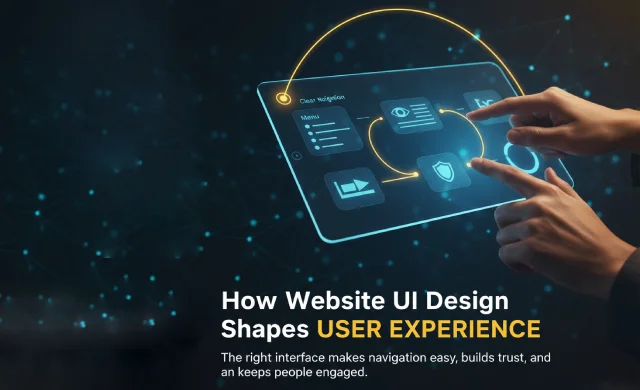
Good website UI design plays a big role in how people feel and behave on a site. The right interface makes navigation easy. It helps users read content without strain. It also builds trust and keeps people engaged. Let’s explore how design choices influence usability, clarity, and confidence step by step.
Improving Usability Through Layout and Flow
When the layout feels natural, users instantly know where to go next. Simple menus, clear buttons, and logical content placement reduce confusion. Users can find what they want without guessing. A messy layout makes visitors think too much. This leads to frustration and exits. On the other hand, a smooth layout guides users effortlessly through your content and interactive elements, creating a more usable and satisfying experience.
Enhancing Clarity Through Visual Hierarchy
Good UI design uses visual hierarchy to show what matters most first. Big headings, balanced spacing, and clean typography help users scan pages quickly. When designers use contrast, consistent fonts, and clean structures, users feel more at ease and less overwhelmed by information. This clarity reduces bounce rate and makes the website feel inviting and easy to use.
Building Trust Through Design Consistency
Consistent design builds confidence. When colors, buttons, and layouts behave the same way across pages, users feel in control. They know what to expect next. A shattered or mismatched interface triggers doubt. People leave before they explore. A thoughtful UI design shows users that your brand respects their time and attention. This kind of trust encourages them to stay longer, interact more, and come back in the future.
In short, thoughtful UI design improves how users navigate, understand, and interact with your website. This leads to better engagement, satisfaction, and overall experience.

How Smart UI Design Drives Engagement and Conversions
Smart website UI design does more than make a site look good. It shapes how users behave. When the interface feels smooth and user-friendly, people stay longer, click more, and interact with confidence. Over time, these small actions (micro-interactions) turn into real business results.
Creating Friction-Free User Journeys
Users come with a goal. They want information, a product, or a quick answer. When the interface feels cluttered or confusing, they leave. A clean layout, clear navigation, and sensible white space remove friction. Pages become easy to move through. Content becomes easy to read. As a result, time on site improves and users explore more pages. Good interaction design helps users flow from one step to the next without feeling lost.
Designing for Actions, Not Just Visuals
Great UI and UX design always considers what users should do next. Clear buttons, well-placed interactive elements, and readable typography guide attention. Calls to action feel obvious but not pushy. When users understand where to click, they click more often. This leads to higher engagement and stronger intent. The design supports the action instead of distracting from it.
Optimizing Layouts for Higher Conversions
Thoughtful interface design connects directly to outcomes like leads, enquiries, and sales. Visual hierarchy highlights what matters most. Important messages stand out. Forms feel simple and usable. When users trust the experience, they feel comfortable sharing details or completing a purchase. Consistent visual design also builds brand credibility. This reassurance plays a key role in conversion-focused web design.
In the end, smart UI design works quietly in the background. It keeps users engaged. It removes doubt. And it turns everyday visits into meaningful business opportunities.
Core Principles Behind High-Performance Website UI Design
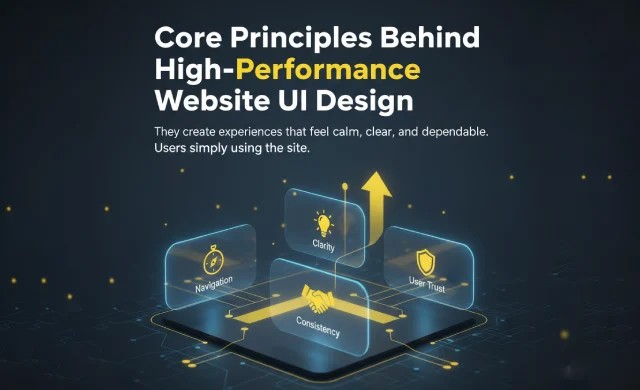
High-performing website UI design follows a few clear principles. These principles help users move with ease. They reduce confusion. And they create experiences that feel calm, clear, and dependable. When done right, users do not notice the design. They simply enjoy using the site.
Simplicity and Visual Clarity
Simplicity makes interfaces easier to understand. Clean UI removes clutter and focuses attention on what matters. Clear visual elements guide the eye naturally. When pages feel visually appealing but not crowded, users feel relaxed. They can read, scan, and act without effort. This clarity improves usability and keeps users engaged longer.
Consistent Design Systems
Consistency builds comfort. When UI components look and behave the same across pages, users feel in control. Buttons respond as expected. Navigation stays familiar. A strong design system keeps visual design unified and predictable. This consistency supports good user experience and strengthens brand credibility at the same time.
Logical Structure and Spacing
Good layout relies on structure and white space. Content needs room to breathe. Clear spacing separates sections and improves readability. Logical grouping helps users understand information faster. When the interface feels organized, users can focus on their goals instead of figuring out the page.
Responsive and Mobile-First Layouts
Today, users switch between devices often. A responsive layout ensures the interface works well everywhere. Mobile-first thinking keeps navigation simple and content usable on smaller screens. This approach supports seamless interaction across websites and applications, without losing clarity or function.
Accessibility and Readability
Great UI design considers everyone. Readable typography, strong contrast, and accessible navigation help more users interact with ease. These choices improve overall user interface design. They also show care for users’ needs. When a site feels usable to all, trust grows naturally.
Together, these principles turn good design into excellent UI design. They create clarity. They support usability. And they help digital products feel effortless to use.

Why Businesses Trust ScreenRoot for Website UI Design
Businesses choose ScreenRoot for website UI design because the focus goes beyond surface-level visuals. The team brings years of experience in digital design, backed by a deep understanding of how users think, behave, and interact. This balance of creativity and clarity helps brands build interfaces that feel intuitive, usable, and purpose-driven.
ScreenRoot’s strength lies in its research-led approach to UX and UI design. Every project begins by understanding users’ needs, business goals, and the target audience. This foundation shapes the interface, the layout, and the overall user experience. As a result, the design does not just look good. It works well. It supports navigation, usability, and clear interaction across digital products.
With a strong enterprise focus, ScreenRoot is used to designing for scale and complexity. The team works closely with UX designers, developers, and stakeholders to create seamless interfaces for large organizations. Proven design systems ensure consistency across screens, platforms, and future updates. This leads to stable, reliable, and user-friendly website design that grows with the business.
ScreenRoot also believes in long-term partnerships. The design process stays collaborative and transparent from start to finish. Design skills, strategic thinking, and practical execution come together to deliver excellent UI design outcomes. For businesses, this means fewer redesigns, stronger engagement, and digital experiences that continue to perform over time.
In short, ScreenRoot earns trust by combining strategy, structure, and thoughtful interface design. The result is not just a great-looking website, but one that delivers lasting value.

When Should You Invest in Professional Website UI Design?
There comes a point when a website starts holding a business back instead of helping it grow. That is often the right moment to rethink website UI design. The signs are usually subtle at first. Over time, they become hard to ignore.
One common trigger is low engagement. Users land on the site but leave quickly. Pages feel hard to read. Navigation feels confusing. Interactive elements do not invite clicks. A cluttered interface or outdated visual design can make even strong content feel less useful. When usability drops, bounce rates rise. And opportunities slip away.
Growth is another clear signal. As businesses scale, their digital presence needs to keep up. New services, larger audiences, and evolving users’ needs demand better structure and clarity. What worked for a small website may not support a growing digital product. A stronger layout, cleaner UI components, and a more seamless user experience become essential.
Product launches and digital transformation also call for sharper interface design. New offerings need clarity. Messages need focus. Users should understand value fast. A thoughtful approach to UI and UX design ensures the website feels modern, user-friendly, and aligned with the brand’s direction.
Sometimes, the question is simple. Does the site feel easy to navigate? Does it look visually appealing and easy to use today? If the answer feels uncertain, it may be time to invest in professional UI design.

Partner with ScreenRoot for Impactful Website UI Design
A strong digital presence starts with clarity. It grows with consistency. And it succeeds when users feel confident at every step. This is where ScreenRoot makes the difference. Our work blends visual design, usability, and strategic thinking to create interfaces that feel intuitive and perform with purpose. We design for real users, real businesses, and real outcomes.
At ScreenRoot, we understand that UI and UX design is not about trends alone. It is about solving problems. We focus on layout, navigation, typography, and interactive elements that make websites easy to navigate and visually appealing. Our design process stays rooted in users’ needs, accessibility, and overall user experience. This approach helps brands build trust, improve engagement, and drive meaningful actions across digital products.
What sets us apart is depth. Our design team brings years of experience across complex websites and applications. We work closely with stakeholders, UI designers, and developers to deliver seamless, user-friendly interfaces. From UI UX audits and usability testing to UX research and scalable design systems, every decision supports clarity and long-term growth.
If your website feels outdated, hard to use, or ready for the next phase, now is the time to act. Speak with our UI experts. Get your website UI audit. Or start your design journey with ScreenRoot.
ScreenRoot is a premier UI UX design agency specializing in UI UX design, UX research, usability testing, and more. Book a discovery session today. Call 1800 121 5955 (India), email [email protected], reach us on WhatsApp, or connect via the Contact Form on our website. Let’s build a great interface together.